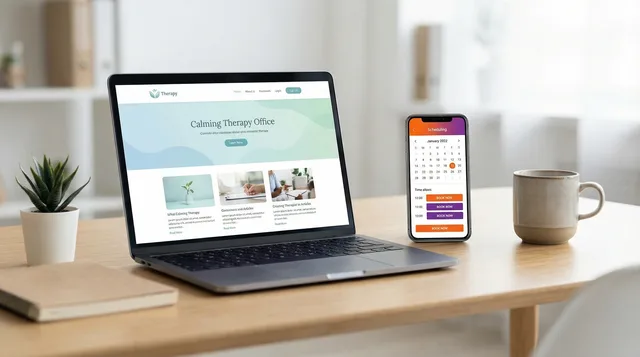

If your therapy practice gets referrals, has a Psychology Today profile, or stays active on Instagram, it is easy to think a website is optional.
After all, if people can already find you somewhere online, why add another thing to manage?
Because a website does something those other platforms cannot do well: it helps the right prospective client trust your practice on your terms.
That still matters in 2026, maybe more than ever.
Directories and Social Profiles Are Not the Same as a Website
A directory listing can help someone discover you. Social media can show your personality. Referrals can create initial trust. But none of them fully replace a website.
You do not control the experience
On third-party platforms, you are fitting your practice into someone else’s structure. You get limited space, limited messaging, and limited flexibility. A website gives you room to explain who you help, how you work, and what the next step looks like.
You cannot shape the first impression the same way
A therapist website can feel calm, specific, and reassuring. A directory profile is mostly a listing. That difference matters when someone is choosing who to contact for something personal.
Your website becomes your digital home base
When referrals, directories, and search all point back to a strong website, your practice feels more established. Without that hub, your online presence can feel fragmented.
Why a Website Still Helps You Win Right-Fit Clients
People are not only trying to confirm that you exist. They are trying to figure out whether your practice feels like a fit.
It helps clients self-select
When your site clearly explains specialties, approach, location, telehealth options, or common concerns you treat, the right people can recognize themselves faster. That means better-fit inquiries and fewer confused leads.
It supports referrals better
Even when someone hears about you through word of mouth, they usually look you up. Your website is often where that referral is either reinforced or weakened.
It strengthens your Google presence
You do not need to overcomplicate this. A website simply gives search engines and prospective clients more signal that your practice is real, active, and relevant.
What Happens When You Skip the Website
Without a website, a lot of small moments start working against you.
- Referrals have nowhere strong to land
- Your messaging stays shallow or scattered
- Potential clients have to piece together basic information
- Your practice looks smaller or less established than it really is
None of this means you cannot get clients without a website. Some therapists do. But it usually means you are making trust harder than it needs to be.
What a Therapist Website Actually Needs
The good news is you do not need a giant site.
A strong therapy website usually just needs a few things done well:
- A clear homepage that says who you help
- Specialties or services explained in plain language
- A simple about page that builds credibility
- An easy next step for contact or consultation
- A design that feels calm and professional on mobile
That is enough to create a much better first impression than a directory profile alone.
The Bottom Line
If you want the right people to trust your practice, understand your fit, and feel confident reaching out, a website still matters.
Directories, social media, and referrals can all support growth. But your website is the place where those signals come together and become a real first impression.
If you want a custom website for your therapy practice, view PremPage pricing here.